
Writing effectively for the web means approaching your content with the reader and the medium in mind. This article will explore some of the differences between printed and web content and offer tips to help you communicate better with an online audience both in Aula and other online platforms like Coventry.Domains.
Use Plain English
Plain English expresses information clearly and simply. Even higher literacy learners prefer plain English because it helps them to process information faster.
- Picture your audience and write as though you were talking face to face.
- Do not use long or complex words where short, simple ones will do.
- Remove unnecessary words.
- Avoid jargon and explain specialist terms at the first use.
- Introduce and spell out acronyms and abbreviations at the first use.
Writing for print vs online
Here’s what a typical article looks like in a scientific journal (either printed or in PDF format):
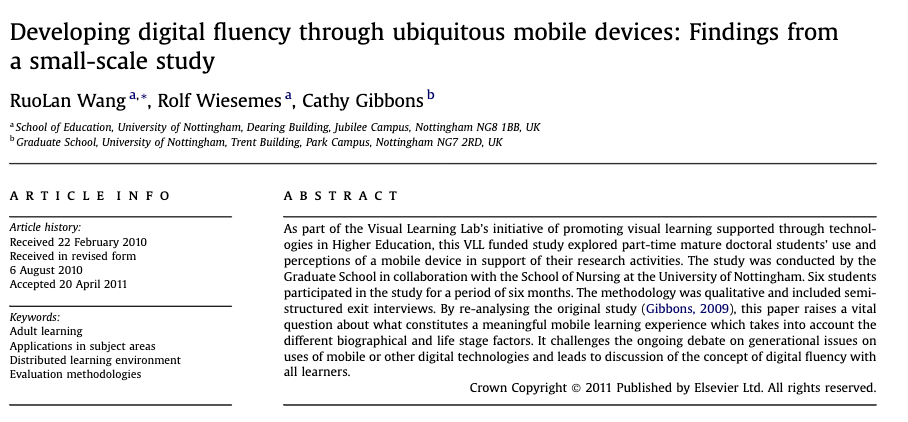
And here’s what the same article looks like viewed from a smartphone:
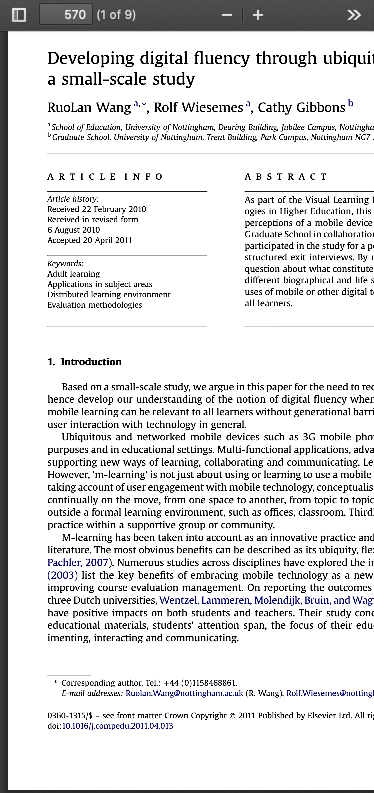
The information is cut off, it’s mostly illegible, and it’s a poor experience for the user.
It’s not just about responsiveness (the text shrinking or flowing in response to the size of the screen). Even if all this text was legible on a phone, it would look like a huge wall of text which would be very straining for the reader.
Research shows that people find it much harder to read on a screen for long periods of time as compared with print. This means that in print, long paragraphs and sentences aren’t always an issue, but on the web, big blocks of text and long pieces of content can be a struggle.
Know your audience
Bear in mind that you’re writing content for students who may be coming from different socio-economic or cultural background than yourself, so clear communication is key.
Even when it comes to students coming to you from English-speaking countries, reading difficulties are fairly common:
- In England, 1 in 6 adults have very poor literacy skills
(in Scotland, this figure is even higher) - Around 10% of people in the UK are dyslexic

Tips for writing better content online
When we read online, we tend to scan the content first and then (hopefully) come back to read it properly. If readers want to scan your work, you can take a few steps to make your best content stand out and draw them into reading the whole thing.
Use headings
Headings and subheadings are your friends. Not only will they help your readers to navigate your work, they will also help you to keep your content organized in your own mind.
When writing in Aula, the best way to create scanable headings for your content is a block of text on its own in bold font – for emphasis, you could use asterisks, hashtags or emojis to draw attention to it like this:
?? Announcement: Change to Office Hours ??
Mix it up
Avoid those dreaded walls of text by offering your readers different forms of visual information. This can not only break up your content but also enrich your writing online and help boost your rankings in the search engines.
Consider whether your article could be improved by using
- Bold and italicised text
- Block Quotes
- Images, graphics and interactive data visualisation tools

Mix up paragraphs and sentence length as well. There’s no rule against using single-sentence paragraphs or single-word sentences.
It’s fine.
Honestly.
Closing
Writing for the web is very different from writing for print. It pays to make your content scanable, catch people’s attention and keep people interested all the way through.
Becoming better at writing for the web is also a good foundation for becoming a better communicator overall.
Original author: Noah Mitchell
Edited by: Education Technology
